
Karinthandan Temple
Visit Karinthandan Temple in Wayanad, a historic shrine dedicated to the tribal chieftain Karinthandan near Lakkidi. Learn about the Chain Tree legend, timings, and how to reach.
Karinthandan Temple is a modest but historically significant shrine near Lakkidi in Wayanad, dedicated to the memory of Karinthandan, a tribal chieftain whose legendary sacrifice is woven into the very geography of this hill district. While Wayanad has grand temples like Thirunelli with thousand-year lineages, Karinthandan Temple tells a more recent and deeply local story — one of colonial betrayal, indigenous knowledge, and a community’s determination to honour its own.
The Story Behind the Temple
The legend of Karinthandan is central to Wayanad’s cultural identity. During the British colonial period, the dense forests of the Western Ghats made the Wayanad plateau virtually inaccessible from the Kozhikode lowlands. A British engineer tasked with surveying a road through the mountains sought help from the local tribal communities, and Karinthandan — a chieftain who knew the forests intimately — agreed to guide him through a secret path across the Thamarassery Churam.
Once the route was surveyed and road construction began, Karinthandan was allegedly killed so that no rival could independently learn the path. His death went unacknowledged for generations. The road that now carries millions of travellers up the hairpin bends of the Thamarassery Ghat owes its existence to the knowledge he shared, yet for over a century his name appeared only in local folklore.
The temple was established by the tribal community to preserve his memory and ensure that his sacrifice was not forgotten. It serves both as a place of worship and as a cultural marker, reminding visitors that the roads and routes they travel through Wayanad were not carved from empty wilderness — they were guided by people who knew this land long before colonial surveyors arrived.
What to Expect at the Temple
Karinthandan Temple is a small, unassuming structure compared to Kerala’s ornate Hindu temples. It does not have towering gopurams or elaborate stone carvings. Instead, it reflects the simplicity of the tribal traditions from which it emerged. The shrine is typically decorated with flowers and simple offerings, and local tribal families maintain it as a community space.
The atmosphere is quiet and contemplative. Unlike busier tourist attractions in Wayanad, Karinthandan Temple receives relatively few visitors, which gives it an unhurried, personal quality. There are information boards in the area that recount the legend, and speaking with locals can add layers to the story that written accounts miss. Many visitors combine a stop here with a visit to the nearby Chain Tree, which is the other half of the Karinthandan legend — the ficus tree wrapped in iron chains where his spirit is said to have been bound.
Connection to the Chain Tree
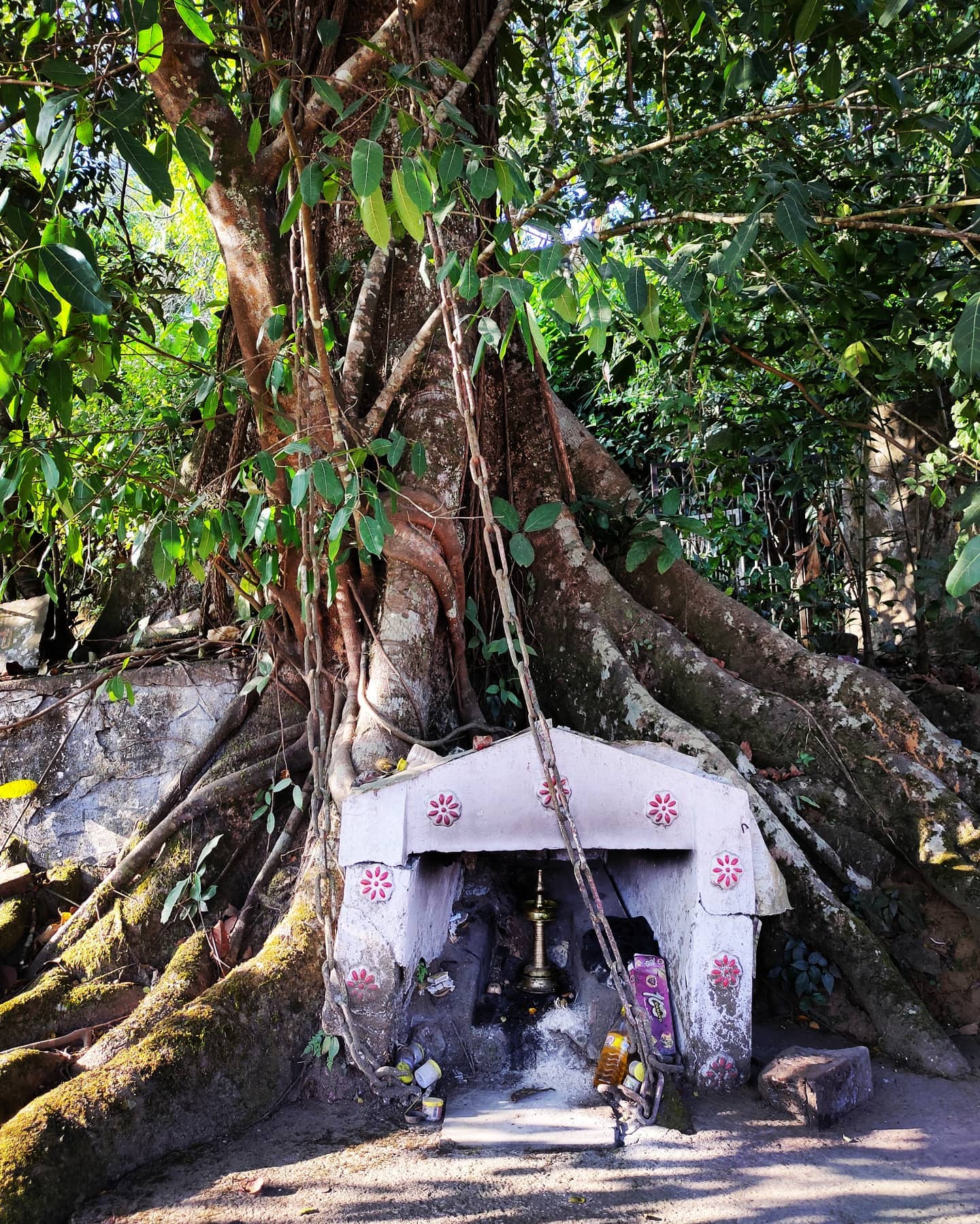
The Chain Tree at Lakkidi, barely a few kilometres from the temple, is perhaps the more famous landmark associated with Karinthandan. According to local belief, after his death Karinthandan’s restless spirit caused accidents and eerie disturbances along the newly built ghat road. A priest chained the spirit to a large ficus tree to pacify it, and over the decades the tree has accumulated multiple layers of heavy iron chains from devotees and travellers.
Visiting both the Chain Tree and Karinthandan Temple together provides a complete picture of the legend. The Chain Tree represents the folklore and the ghost story that draws curious travellers; the temple represents the community’s effort to reclaim Karinthandan’s narrative from superstition and honour him as a historical figure who made a real sacrifice.
The 2019 Statue and Modern Recognition
A significant turning point came in 2019 when the Kerala state government unveiled a statue of Karinthandan along the Thamarassery Ghat road. This was more than a ceremonial gesture — it was a formal acknowledgement by the state that Karinthandan’s contribution to opening Wayanad was real and historically important. The statue has become a stop for travellers ascending the ghat, and it has brought renewed attention to both the temple and the broader conversation about indigenous history in Kerala.
For visitors interested in tribal heritage, the temple sits within a network of cultural sites in Wayanad. The En Ooru Tribal Heritage Village near Vythiri offers a more immersive look at tribal life, while the Wayanad Heritage Museum in Ambalavayal documents the district’s archaeological and anthropological history.
How to Reach
Karinthandan Temple is located near Lakkidi, at the eastern edge of the Thamarassery Ghat on the NH766 highway. From Kalpetta, drive approximately 7-8 km south toward the ghat section. The temple is signposted and accessible from the main road. From the Kozhikode side, the temple is reached after ascending the ghat road and passing the famous hairpin bends, near the point where the road levels out onto the Wayanad plateau.
- From Kalpetta: 7-8 km, approximately 15-20 minutes by car
- From Kozhikode: 78 km via Thamarassery Ghat, approximately 2.5-3 hours
- From Sulthan Bathery: 30 km, approximately 45 minutes
- Parking: Limited roadside parking is available near the temple
Nearby Attractions
The temple’s location near Lakkidi places it at the gateway to Wayanad’s Vythiri tourism belt. Within a short drive you can visit:
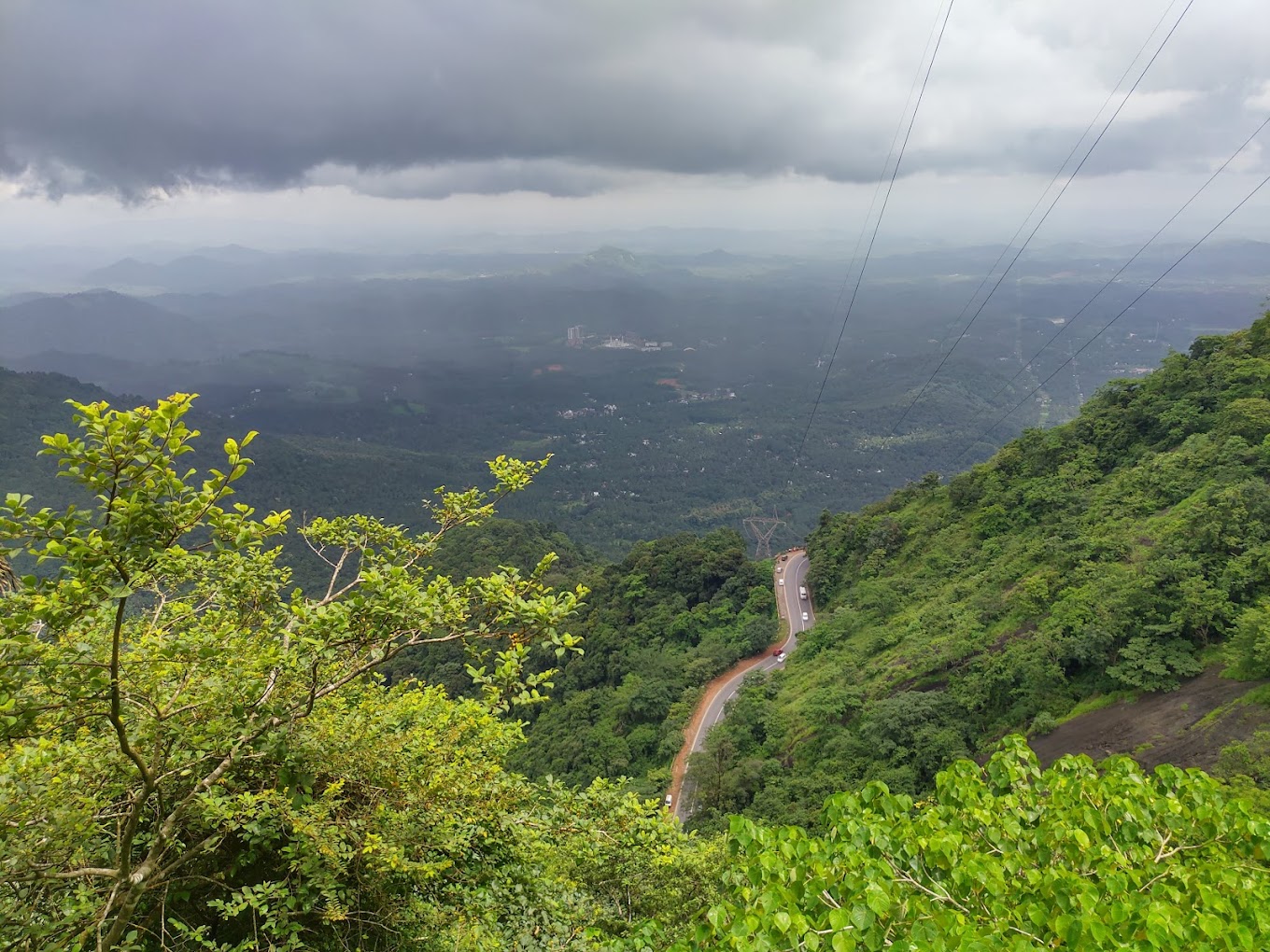
- Lakkidi Viewpoint — spectacular views of the ghat road switchbacks and the Kozhikode plains below, barely 1 km from the temple
- Chain Tree — the legendary chained ficus tree connected to Karinthandan’s story, on the ghat road
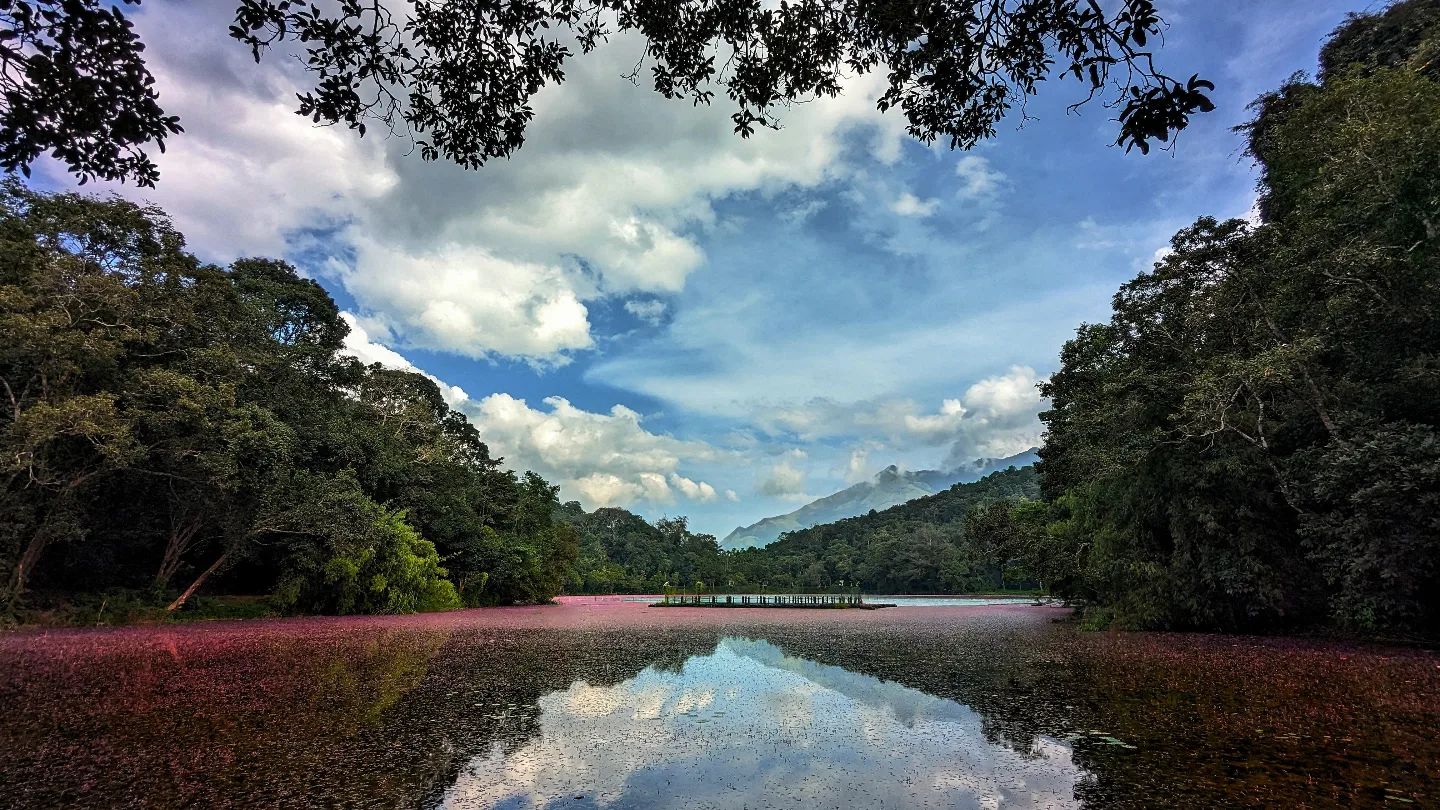
- Pookode Lake — a serene freshwater lake surrounded by forest, about 3 km from Lakkidi, ideal for a pedal-boat ride
- Mitti Pottery Studio — a hands-on pottery workshop in a hillside setting near Vythiri
Best Time to Visit
Karinthandan Temple can be visited year-round. The most comfortable months are October to February, when the weather is cool and visibility is clear. During monsoon season (June-September), the surrounding landscape is lush and dramatic, but expect heavy rain and reduced visibility on the ghat road. The temple area is particularly atmospheric during the monsoon, with mist rolling through the valley.
Visiting Information
- Opening Hours: Approximately 6:00 AM to 6:00 PM (no strict ticketed entry)
- Entry Fee: Free
- Duration: 20-30 minutes for the temple; allow 1-2 hours if combining with the Chain Tree and Lakkidi Viewpoint
- Dress Code: Modest clothing is appreciated as this is a place of worship
- Tip: Visit early morning for the quietest experience and the best light for photographs of the surrounding valley
* For exact directions, we recommend contacting our travel desk or using Google Maps navigation.
Explore Trip Plans
Plan Your Visit
Get help with stays, transport & itinerary for Karinthandan Temple
Chat on WhatsAppFree trip planning assistance
Frequently Asked Questions
Who was Karinthandan?
Karinthandan was a tribal chieftain of the Paniya or Kurichiya community in Wayanad. According to local legend, he guided a British engineer through the dense forests of the Thamarassery Churam, revealing a secret path that led to the construction of the ghat road connecting Kozhikode to the Wayanad plateau. He was allegedly betrayed and killed after sharing this knowledge, and his spirit is said to haunt the area near the Chain Tree at Lakkidi.
What is the connection between Karinthandan Temple and the Chain Tree?
The Chain Tree at Lakkidi is directly linked to the legend of Karinthandan. After his betrayal and death, Karinthandan's spirit reportedly caused disturbances along the ghat road. A priest is said to have chained the spirit to a ficus tree to pacify it. The Karinthandan Temple was later established to honour his memory and provide a place of reverence for the tribal leader whose sacrifice opened Wayanad to the outside world.
What are the visiting hours for Karinthandan Temple?
Karinthandan Temple is generally accessible during daylight hours, from around 6:00 AM to 6:00 PM. There are no strict ticketed entry times. During local festivals or special ceremonies, the temple may have extended hours. It is advisable to visit during the morning for a quieter experience.
Is there an entry fee for Karinthandan Temple?
No, there is no entry fee to visit Karinthandan Temple. The temple is maintained by the local community and tribal welfare organisations. Voluntary donations are welcome and go toward temple upkeep and community programmes.
How do I reach Karinthandan Temple from Kalpetta?
Karinthandan Temple is located near Lakkidi, approximately 7-8 km south of Kalpetta on the NH766 (Kozhikode-Mysore highway). Drive toward the Thamarassery Ghat section. The temple is signposted near the Lakkidi area. Auto-rickshaws and taxis from Kalpetta can reach the temple in about 15-20 minutes. There is no direct public bus service to the temple, but buses plying the Kalpetta-Kozhikode route stop at Lakkidi, from where it is a short walk.
Is Karinthandan Temple open during monsoon season?
Yes, the temple remains open during monsoon (June-September). However, the surrounding area receives heavy rainfall, and the ghat road can be foggy and slippery. Visitors should exercise caution while driving and wear appropriate footwear. The misty monsoon atmosphere adds a dramatic quality to the temple setting.
What is the significance of the Karinthandan statue at Thamarassery Ghat?
In 2019, the Kerala state government unveiled a statue of Karinthandan at the Thamarassery Ghat section, formally recognising his contribution to opening the route between Kozhikode and Wayanad. The statue stands as an acknowledgement of the tribal community's role in the region's history and represents a broader movement to honour indigenous contributions that were overlooked during the colonial period.
Nearby Places to Explore
 attraction
 Chain Tree
The Chain Tree is a large tree with a thick chain, a well-known local landmark.
 attraction
 Lakkidi Viewpoint
A hill-road viewpoint near Vythiri with views over the Thamarassery Ghat and surrounding Western Ghats. Visibility and road conditions should be checked before travel.
 attraction
 Pookode Lake
A natural freshwater lake near Vythiri, Wayanad, known for its forest setting and visitor facilities. Confirm current hours, entry rules and boating availability before visiting.